

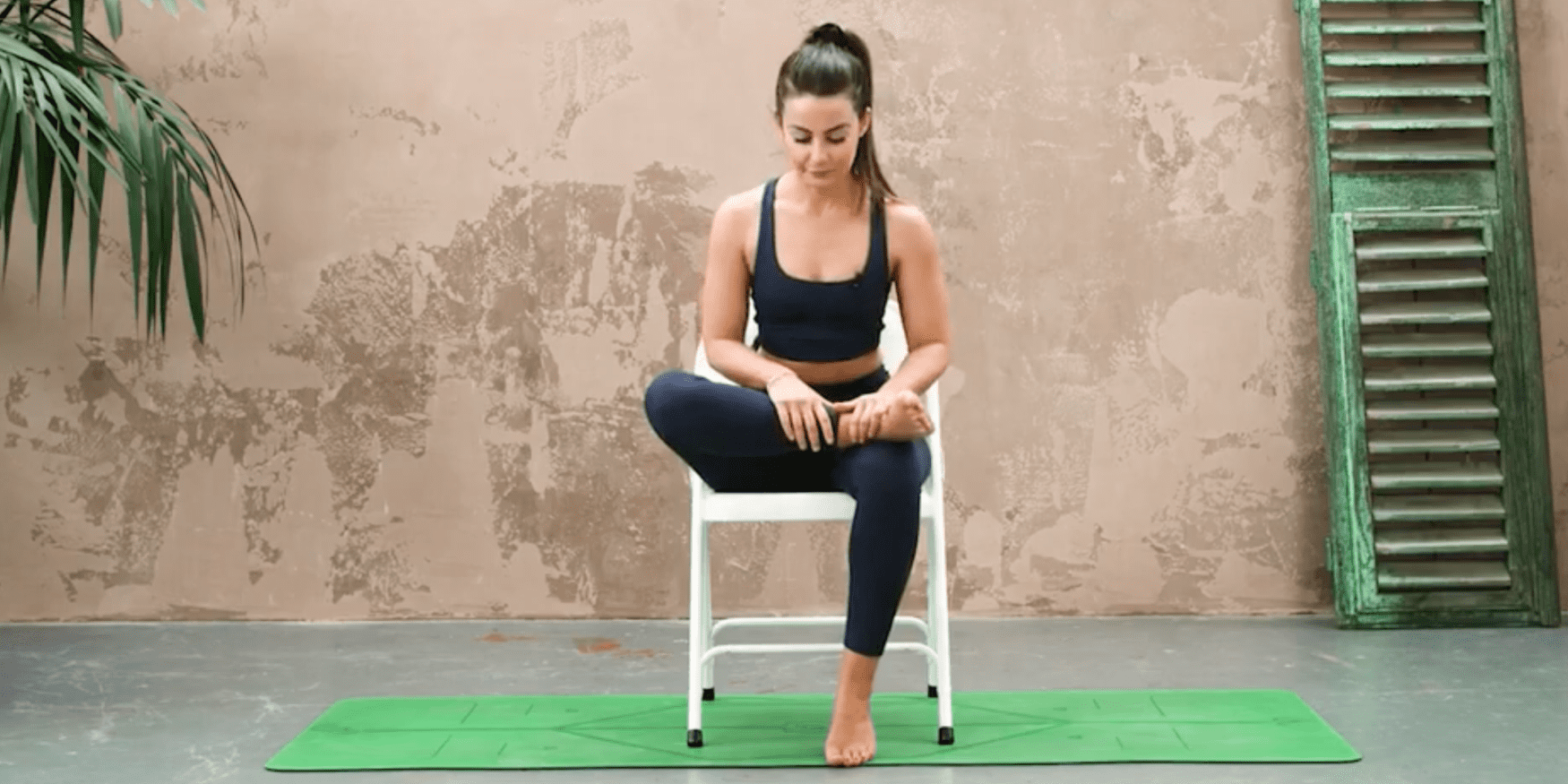
Many people hear the word chair and immediately assume the practice is only for elderly people. That is a misunderstanding. chair yoga can be useful for office workers, people with stiff bodies, beginners, people returning to exercise, individuals with balance concerns, and anyone who wants a more accessible way to move without getting up and down from the floor repeatedly.
Modern bodies are often tired in a specific way. The mind is busy, the back is stiff, the neck is tight, the hips feel locked, and the body does not always have the energy for a full mat-based class. Chair yoga gives people a practical middle path. It allows them to move, breathe, stretch, and build awareness while using the chair for support.
Why Chair Yoga Is More Useful Than People Think
A chair does not make yoga weak. It changes access. For many students, the hardest part of yoga is not the movement itself, but the transitions. Getting down to the floor, rising back up, balancing on one leg, or holding weight through the wrists may feel difficult.
Chair yoga reduces some of these barriers. The chair can support seated poses, standing balance, gentle twists, shoulder work, hip mobility, and breathing practice. Students can still work on posture, strength, flexibility, coordination, and relaxation, but with more stability.
This makes the practice useful for people who need yoga to meet their body where it is.
A Practical Option for Beginners
Beginners often worry that they are not flexible enough for yoga. They may also feel uncomfortable in group classes where others seem more experienced. Chair yoga can make the first step easier.
The chair gives a sense of safety. Students can learn breathing, posture awareness, spinal movement, and basic stretching without feeling overwhelmed by floor poses. This helps build confidence.
A beginner who starts with chair-based practice may later move into other yoga styles. But even if they continue with chair yoga, the practice can still offer meaningful benefits.
Helpful for Desk-Related Stiffness
Many adults spend long hours seated, but not in a way that supports health. Desk sitting often involves rounded shoulders, forward head position, tight hips, and shallow breathing. Chair yoga uses the same object, a chair, but changes the relationship with it.
Instead of collapsing into the chair, students learn to sit with awareness. They can practice spinal lengthening, seated twists, shoulder mobility, ankle movement, hip opening, and breathwork.
This can be especially useful for people who work at laptops all day. The practice helps them understand how to use the chair as a tool for movement, not only as a place to remain still.
Support for People With Balance Concerns
Balance can become a concern for many reasons, including age, inactivity, weakness, injury recovery, or lack of confidence. Standard standing yoga poses may feel intimidating when balance is uncertain.
Chair yoga can help by offering support. Students can hold the chair during standing poses, practice weight shifting, and build confidence gradually. This allows them to train balance without feeling unsafe.
The goal is not to remove challenge completely. The goal is to make the challenge manageable.
Gentle Movement for Joint Sensitivity
Some people avoid yoga because their knees, wrists, or hips do not tolerate certain positions. Chair yoga can reduce pressure on these areas. For example, students do not need to kneel, place heavy weight on the wrists, or sit cross-legged on the floor.
This makes the practice more accessible for people with joint sensitivity. However, students with medical conditions, recent surgery, or ongoing pain should still seek professional guidance before starting.
Chair yoga should feel supportive, not forced.
Breathing and Nervous System Support
Chair yoga is not only physical. It also gives students time to breathe better. Many people breathe shallowly when they sit at a desk or feel stressed. In a chair yoga class, students can sit upright, open the chest, relax the shoulders, and practice steady breathing.
This can help the nervous system settle. A few minutes of breath-led movement can change how the body feels, especially after hours of work or stress.
For people who find meditation difficult, chair yoga offers a movement-based way to calm down.
Posture Awareness Without Pressure
Posture improvement does not come from forcing the body to sit straight all day. It comes from awareness, mobility, and strength. Chair yoga can help students notice how they sit, where they collapse, and where tension builds.
Seated movements can teach the spine to lengthen. Shoulder exercises can reduce upper-body stiffness. Gentle core activation can help support the trunk.
These changes may carry into daily life. A student may begin to notice their posture while working, eating, or commuting.
Who Can Benefit From Chair Yoga?
Chair yoga can benefit a wide range of people. This includes beginners, seniors, office workers, people with limited mobility, people recovering from inactivity, frequent travelers, and anyone who wants a low-pressure movement practice.
It is also useful on low-energy days. A person may not feel ready for a strong class, but they can still move gently and breathe.
This makes chair yoga a practical part of long-term wellness.
Making Chair Yoga a Real Routine
Chair yoga can be practiced in a studio, at home, or even in short workplace breaks. The routine does not need to be long to be useful. A few movements done regularly can reduce stiffness and improve awareness.
For people in Singapore who want an accessible yoga style that supports mobility, posture, balance, and confidence, Yoga Edition can be part of a guided routine where the chair becomes a support for healthier movement.
FAQs
Can I do chair yoga if I am not elderly?
Yes. Chair yoga is useful for office workers, beginners, people with stiff bodies, and anyone who wants supported movement. Age is not the only reason to choose it.
What kind of chair is best for chair yoga at home?
Use a stable chair without wheels. A firm dining chair is usually better than a soft sofa or rolling office chair because it gives safer support.
Can chair yoga help if I feel nervous about joining normal yoga classes?
Yes. Chair yoga can be a confidence-building first step because it removes many difficult floor transitions and gives the body extra support.